About · Seth
I wrote the guide I needed at 2 a.m.
On June 27, 2025, I woke up and half my face didn’t. I went looking for someone who’d actually lived through Ramsay Hunt Syndrome and could tell me what was coming. I couldn’t find them. So a year later, I became them.
One patient’s experience — not medical advice. When in doubt, get seen.
Who’s writing this
I’m not a doctor. I’m the guy this happened to.
Everything on this site comes from one place: I lived it, wrote it down, and cleaned it up so the next person doesn’t have to search in the dark.
My name is Seth. I’m 32, I live in Timnath, Colorado, and I run a land company with my brother. That’s about all you need to know about the before.
The after starts on a Friday morning. I woke up at 6:30 feeling like I’d been hit by a bus and aged fifty years overnight. I couldn’t feel my face unless I touched it. I went to take a drink of water and it flopped right back out of my mouth — I hadn’t even made it to the mirror yet. When I did, I didn’t recognize the person in it.
Ambulance. ER. An MRI to rule out the worst. A diagnosis that hedged — probably Bell’s Palsy, maybe Ramsay Hunt — and a seven-day prescription. It took another month, and a specialist with a scope, before anyone said the words out loud: this is classic Ramsay Hunt Syndrome.
In between, I did what everyone does. I searched. And what I found was clinical pages that told me what the virus was doing to my nerve, and forums full of people as lost as I was. Nowhere could I find a person who’d been a year out the other side, willing to just tell me the truth about what was coming — the vertigo, the taping, the eating, the mirror, the exhaustion, the slow grind back.
That’s the entire reason this site exists. It’s not a medical resource. It’s a field guide — one patient’s honest account, written for the person reading this at 2 a.m. with half their face frozen, terrified, and getting no straight answers.
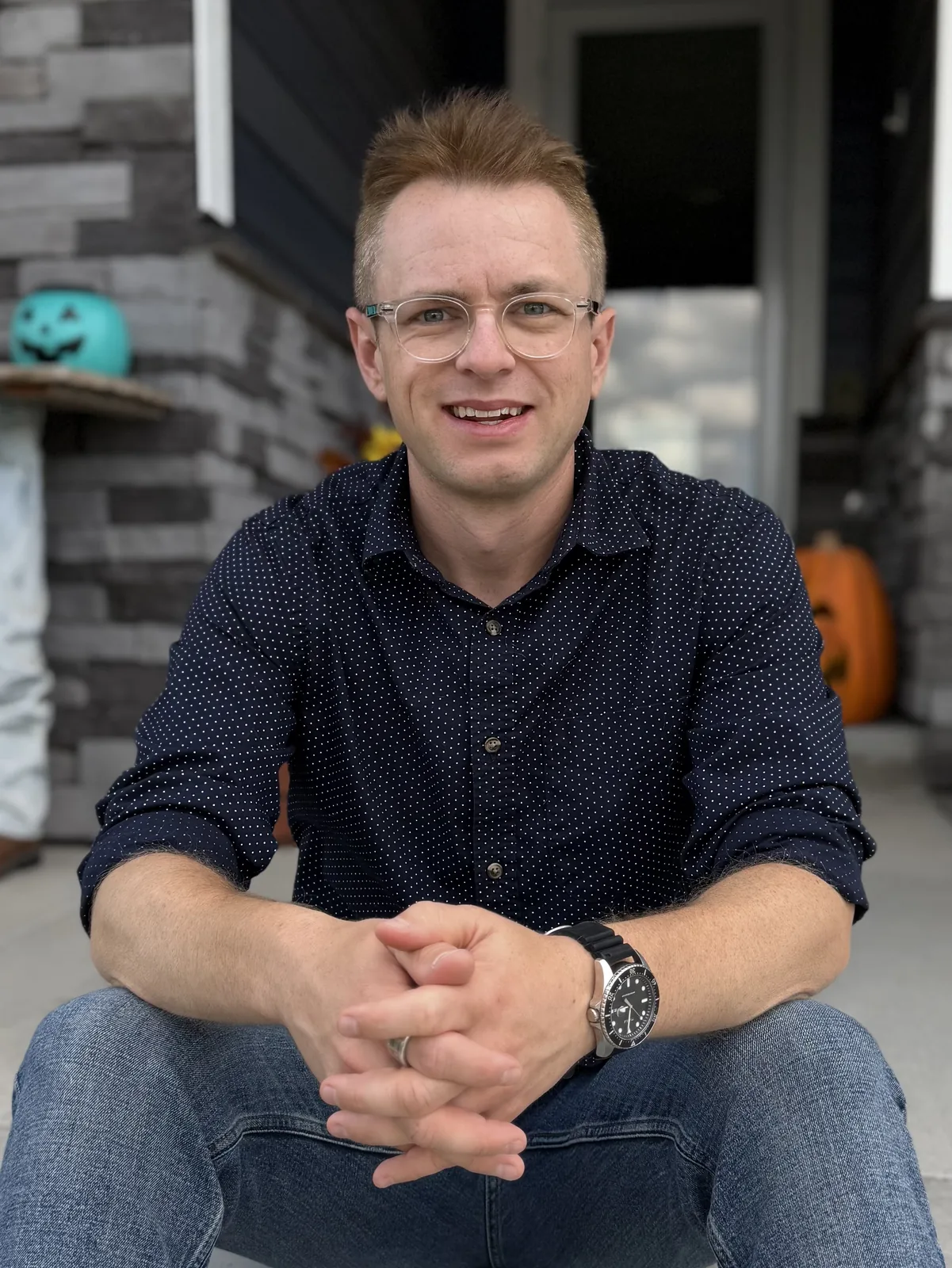
Seth
Patient · Founder
The one thing I’d tell you
Move fast on the meds. Then go build your team.
If you take nothing else from anything I’ve written: get in front of a doctor today and push for the antivirals and steroids. That window — roughly the first 72 hours — is the one time-critical thing that genuinely changes how this goes. I got mine within about 12 to 18 hours, and I credit that with whatever recovery I’ve had. Do not wait it out at home.
And then here’s the part nobody prepared me for. Once I had those pills, the system was mostly out of moves. No cure, no plan, no roadmap. Everything after that — the physiotherapy, the exercises, the tools, the patience — was a team I had to go out and build myself. That’s not me telling you doctors are useless. It’s me telling you the medicine is the start, and the rest is a long, unglamorous rebuild that’s mostly on you.
I wrote down all of it so you don’t have to figure it out alone.
The year, in order
Twelve months, honestly.
Not a recovery template — just what happened to me, when. If you’re early in this, it might help you find yourself on the map.
The morning it happened.
Woke at 6:30 feeling wrecked. Water flopped out of my face. Couldn’t walk straight, couldn’t lift a cup, freezing cold head to toe. Ambulance to the ER, MRI with contrast, nothing worse found. Sent home with prednisone and valacyclovir — a seven-day course — and the words “probably Bell’s Palsy.”
Four days before, my ear had been killing me. My doctor called it an ear infection and gave me antibiotics. It was the shingles virus warming up. Ear pain that won’t quit is worth taking seriously.
The two weeks I’d least like to repeat.
Vertigo like a drunken sailor. Couldn’t sleep. The eye wouldn’t close — when I tried, it rolled back and all I saw was white. Tinnitus arrived on day one and never left. The meds made me starving, jittery, and moody on top of everything else.
Then the panic: I realized the prescription was only seven days, and nobody had told me. I called my doctor sure there had to be more. There wasn’t. Those pills are the start, not the fix — I wish someone had said that out loud.
Finally, the real name for it.
A month in — right around my 31st birthday — I got in with a specialist team. The audiologist found I was nearly deaf in my left ear. The ENT took one look inside with a scope, saw the damage and the rash, and said it plainly: this is classic Ramsay Hunt, not Bell’s Palsy.
Both of them also told me there was nothing more they could do beyond what I’d already been given. That was the moment I understood I’d be building the rest of this myself.
Five pounds, and a walk around the block.
I couldn’t chew on the left side, so I fished food across my mouth with a finger and bit my tongue raw. Soft foods only. Everything tasted metallic. In the gym I was lifting five pounds where I used to do fifty to a hundred, on a treadmill, holding the rails, because my balance was gone. I couldn’t make it around the block.
This is where I learned the one idea that carried me: energy comes in a bucket. A phone call, a walk, an errand — each one draws from the same limited daily supply. Spend it on purpose or pay for it later. I still live by it.
The team I went out and built.
A chiropractor and a physiotherapist. Cranial-sacral work, dry needling, fascia work. The free exercises that actually moved the needle — the mirror exercise, an eye-tracking drill with dots on the wall, massaging the smile back with a glove.
And the cheap red foam thing I’d put above almost everything else I bought: I credit the Still Point with ending my vertigo. That’s my experience, not a claim about what it does for anyone else — but after three months of the room moving, it stopped.
The unglamorous grind.
Red light most days. Breathing work, and taping my mouth shut at night to force nose-breathing. Cut the sugar, the soft drinks, the junk, most of the gluten. Got my driver’s license back in January and went back into the office — a full six months after I’d last shown my face on a video call.
My eye closed.
Ten months after it stopped, my eye blinked and shut on its own again. No drops that day. It’s the smallest thing in the world and I’ll never forget it.
About 75% — and still going.
My smile isn’t all the way back. There’s a strange airflow feeling between my eyebrow and my ear that comes with the nerve rewiring itself. The tinnitus is permanent company. Altitude still wipes me out, and I’m not fully driving yet.
And I’m okay. I lift, I walk, I work, I eat food I can almost taste. If you’re on day three of this and that sounds impossibly far away — it isn’t. It’s just slow. Slow is not the same as stuck.
I got my taste back.
For over a year, everything tasted like metal. Foods I loved, foods I’d always disliked, foods I tried again just to check. Metal, every time.
Then I spent three weeks in Europe eating everything put in front of me. Somewhere in there, it came back. Sweet, savory, spicy, salty, bitter, all of it. Now I actually go looking for new foods, and I enjoy every one.
I credit the trip: a whole new mix of foods, and the new gut bacteria that come with them. That’s my own theory, not medical science, and I can’t prove it. But after fourteen months of metal, I’ll take it.
About 85% — and life is good.
My smile is more even than it was at a year, but it isn’t all the way back. I’d put it around 85%. The airflow feeling between my eyebrow and my ear is still there, the tinnitus hasn’t gone anywhere, and loud rooms are hard. I lose conversations in busy restaurants and crowds.
What changed is the energy. Altitude doesn’t flatten me like it did. I drive, I fly, and I can go all day at work or on a trip and still have something left. And I can taste my food again.
Why this exists
The guide that should have existed.
No paywall, no course, no miracle cure — because there isn’t one. Just the plain truth about what happens, what helped me, what didn’t, and what I’d do differently, written by someone who was exactly where you are now.
I share my own experience. I’m not a doctor and nothing here is medical advice — please take the medical decisions to someone qualified to make them with you. Where I recommend a product I actually used, some links may earn a small commission at no cost to you.
See what actually helpedMeet your field guide
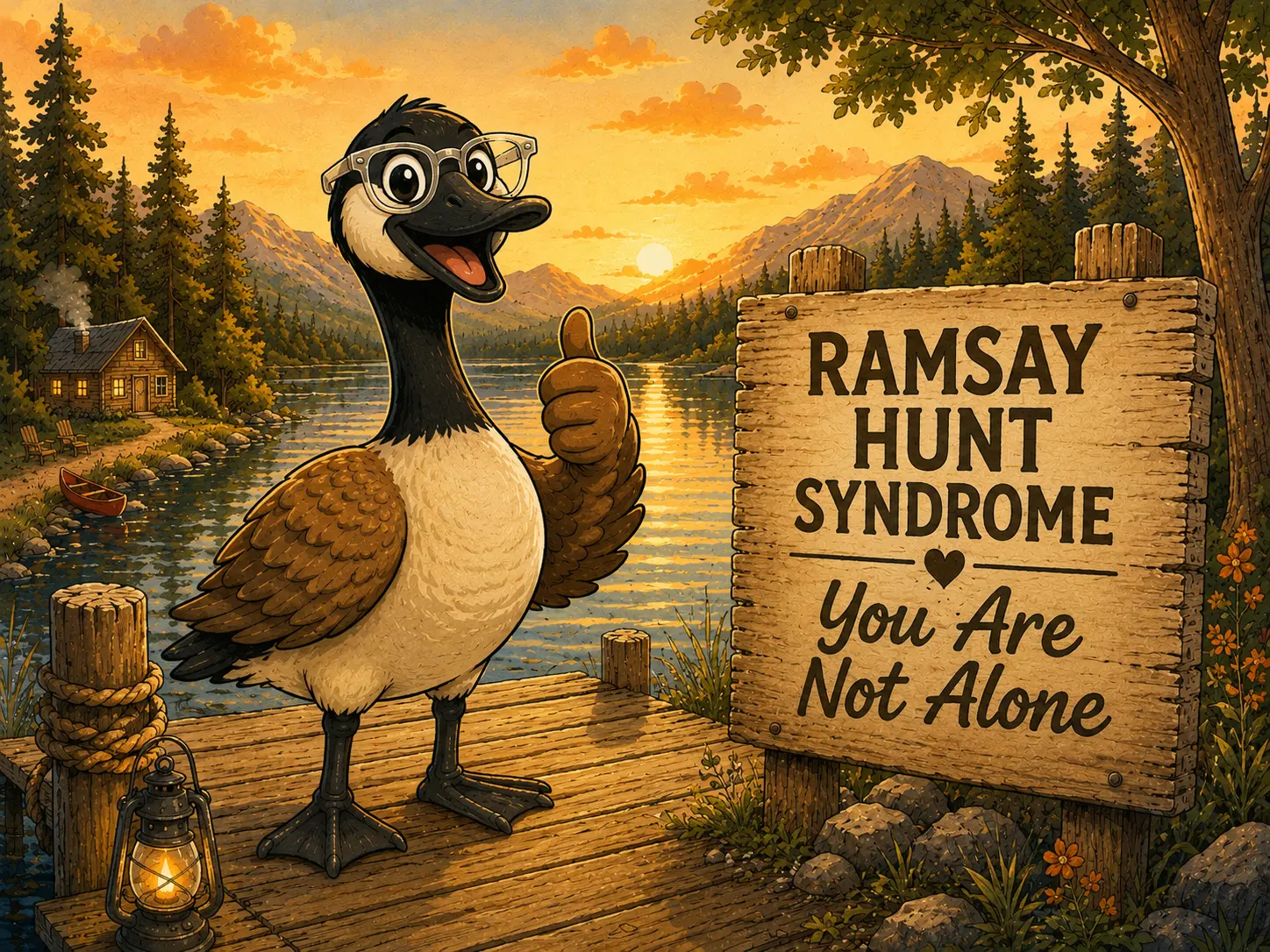
“The dark stretch never lasts the whole flight. No goose gets left behind — and neither do you.”
 Your Friendly Goose & Guide
This is Gilbert. He walks you through the site because a hard year taught me two things geese already knew: the dark stretch of the flight doesn’t last forever, and nobody gets through it flying alone. When my own voice gets heavy, he’s the one who keeps the light on.
The 2 a.m. letter
If you’re reading this in the middle of the night —
Everything is going to be okay.
I know it doesn’t feel that way. You’re staring at a face that isn’t yours, reading pages that don’t answer the question you’re actually asking, and quietly terrified that this is permanent. I have been exactly where you are sitting right now.
So here’s what I want you to hear, in the order it matters.
Go get the medicine. Today, not tomorrow. Use the hospital for the one thing it’s genuinely great at — getting the antivirals and steroids into you fast. Push, ask questions, be a nuisance if you have to. That window closes and it doesn’t reopen.
Then go build your people. Don’t wait for the system to hand you a plan, because it may not have one. Find the practitioners, do the unglamorous daily work, and be relentless about the small things — the eye drops, the exercises, the sleep, the food. This is a long rebuild, and it’s mostly won in the boring hours.
And be gentle with yourself. This is the part I’d underline twice. You’re going to hate how you look and how you feel for longer than seems fair. Cultivate love for that person in the mirror anyway, because that love is the thing that actually carries you through — more than any pill, tool, or therapy I paid for.
It gets better. Slowly, unevenly, unfairly slowly — but it gets better. Close the tabs. Get some sleep. Go see a doctor in the morning.
Seth
Patient · Founder
Reach out
If you want to talk, I’m here.
Whether it’s you going through this or someone you love, and you just want to talk to a person who has actually been there — please reach out. No charge, no catch, nothing to sell you. I answer as a patient a year down the road, not as a doctor, and sometimes it just helps to hear it from someone who genuinely gets it.
The more of us who talk about this out loud, the fewer people face it in the dark.
Reach out & say helloOne patient to another — this is a conversation, not medical care.
Follow along
I’m filming this as I live it.
Short, honest videos from inside the recovery, posted to my YouTube channel as I go. Here are a couple to start — I’ll add more as I make them.
Keep this close
Get the first-week guide.
A short, plain walkthrough of the first seven days — what to do, what to ask, and what to expect — so you can keep it on your phone and stop searching at 2 a.m. It’s free.
No spam. Personal experience, not medical advice. Your email stays private, and you can leave any time.